
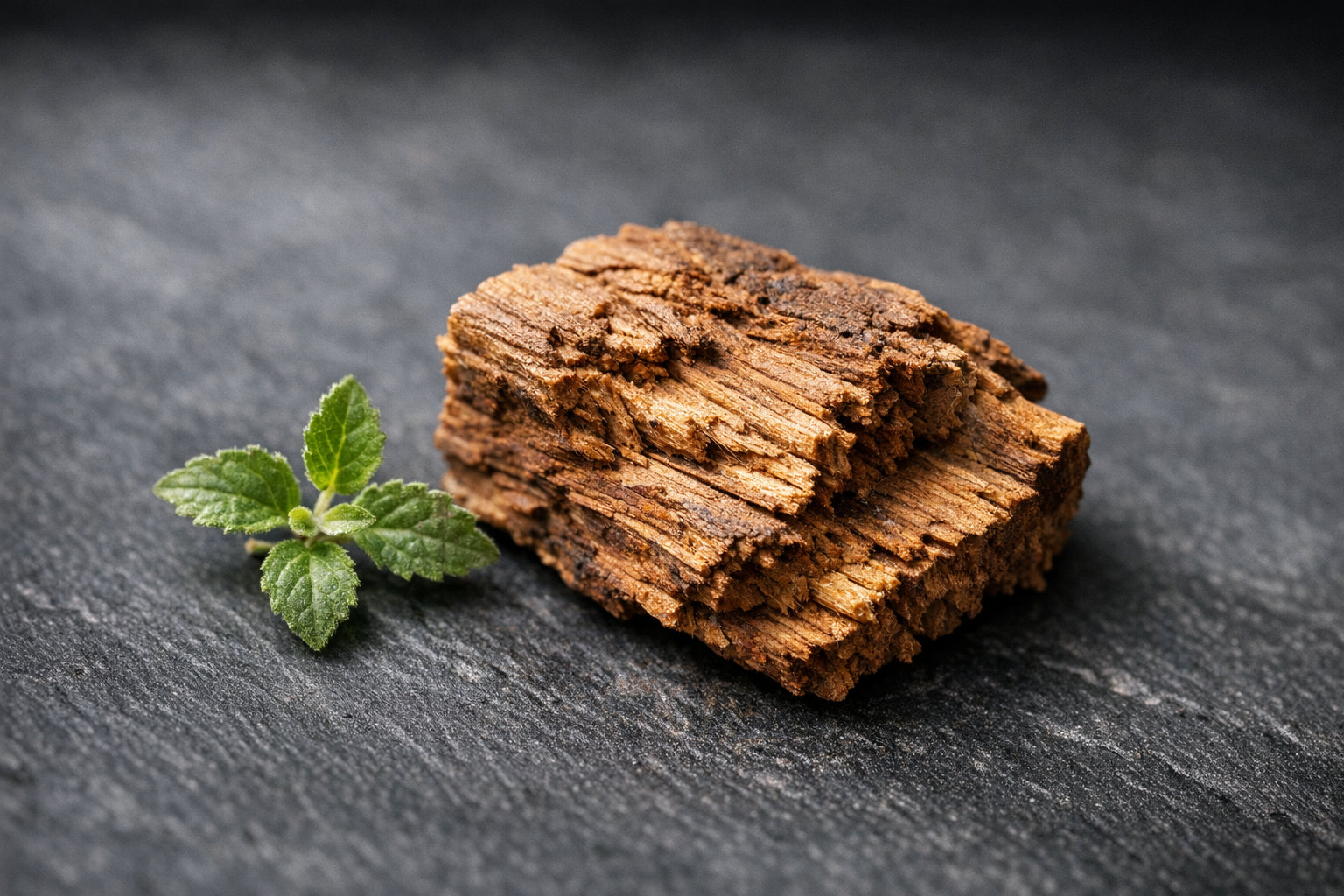
Patchouli
A rich, earthy wood with a distinctive dark, slightly sweet character. Patchouli is one of the most recognisable materials in perfumery and one of the few that improves with age.
Fragrance Pyramid
Olfactive Character
Dark, earthy, and richly textured. Patchouli has a distinctive character that is immediately recognisable. It can read as hippie at high doses or sophisticated when blended carefully. The oil improves with age, becoming smoother and more refined.
Origin & Harvest
Steam-distilled from the fermented and dried leaves of Pogostemon cablin, cultivated in Indonesia, India, and the Philippines. The leaves are typically allowed to partially ferment before distillation to enhance the aromatic profile.
Key Molecules
Patchoulol is the primary aroma compound, providing the characteristic dark, woody scent. Norpatchoulenol adds earthiness. Alpha-bulnesene contributes a subtle woody-green facet.
Safety & Regulation
Well tolerated in fine fragrance. Very low sensitisation potential. IFRA compliant without restrictions. One of the safest natural materials in perfumery.
In Perfumery
Essential to chypre and woody-oriental compositions. Found in Angel by Thierry Mugler and Coromandel by Chanel. Pairs with vetiver, vanilla, and rose. In KIDA KYO, patchouli adds earthy sophistication.
History
Native to Southeast Asia. Reached Europe in the 19th century when Indian cashmere shawls were packed with patchouli to repel moths. Became associated with the 1960s counterculture. Now recognised as one of fine perfumery's most valuable materials.


