
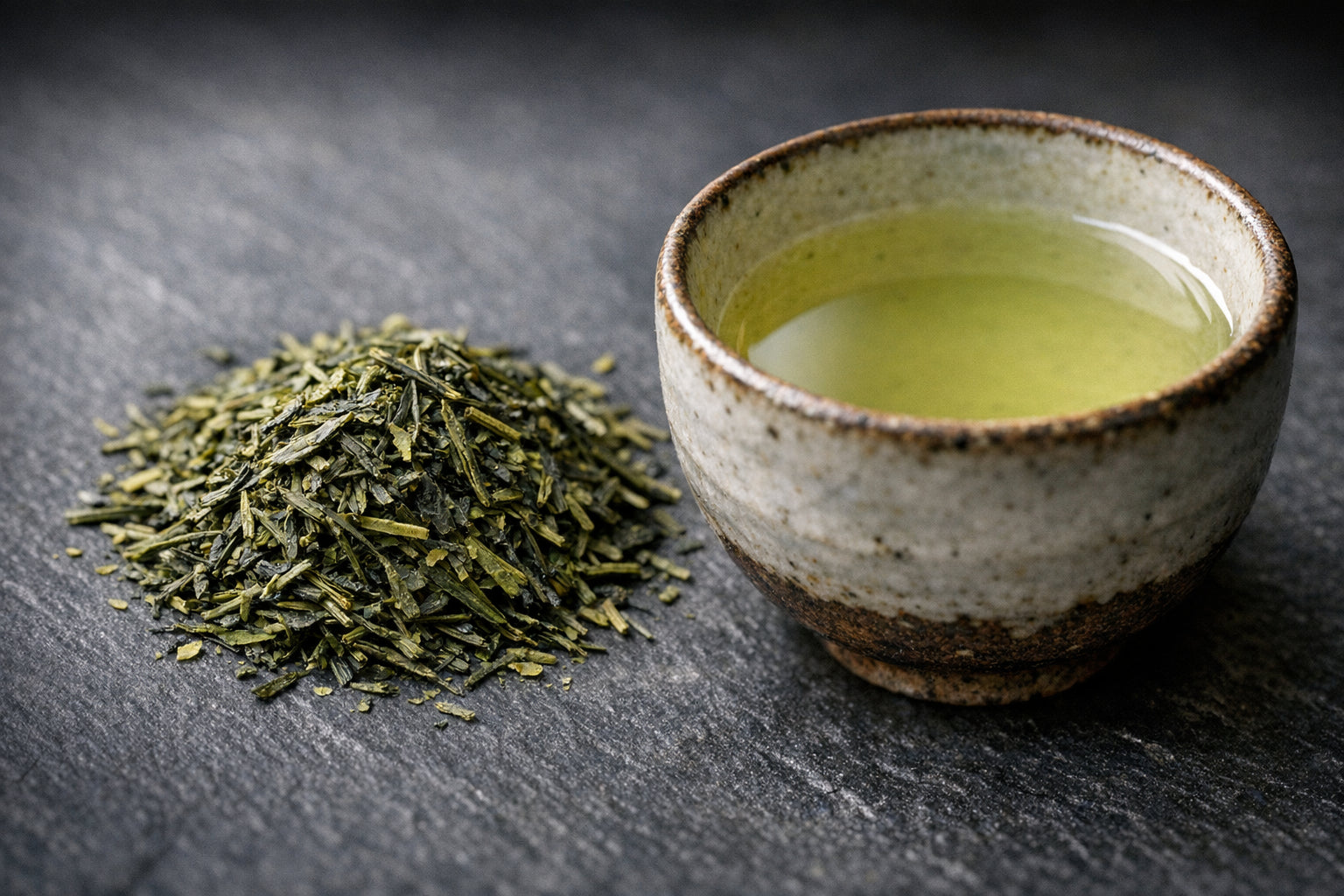
Green Tea
A clean, vegetal freshness with a gentle bitterness. Green tea brings a meditative, understated quality to compositions, evoking calm and clarity.
Fragrance Pyramid
Olfactive Character
Clean, green, and gently bitter. Green tea smells of steamed leaves and calm interiors. It is transparent and understated, adding a meditative quality without dominating a composition.
Origin & Harvest
Green tea accords are typically reconstructed from synthetic and natural materials. Key components include cis-3-hexenol for green freshness and hedione for a transparent floral-green effect. Some houses use tea absolute from Camellia sinensis.
Key Molecules
Cis-3-hexenol and cis-3-hexenyl acetate provide the green, leafy character. Hedione adds radiance. Linalool contributes a gentle floral aspect. The combination creates the recognisable tea impression.
Safety & Regulation
Components are well characterised and IFRA compliant. Green tea absolute, when used, may contain trace allergens. Synthetic reconstructions have minimal sensitisation risk.
In Perfumery
Popularised by Bvlgari Eau Parfumee au The Vert (1992), which pioneered the tea note in fine fragrance. Pairs with citrus, white florals, and light woods. In KIDA KYO, green tea contributes clarity and calm.
History
Green tea has been central to Japanese culture for centuries. Its introduction to perfumery in the 1990s by Jean-Claude Ellena for Bvlgari was a landmark moment, creating an entirely new olfactive family.

