
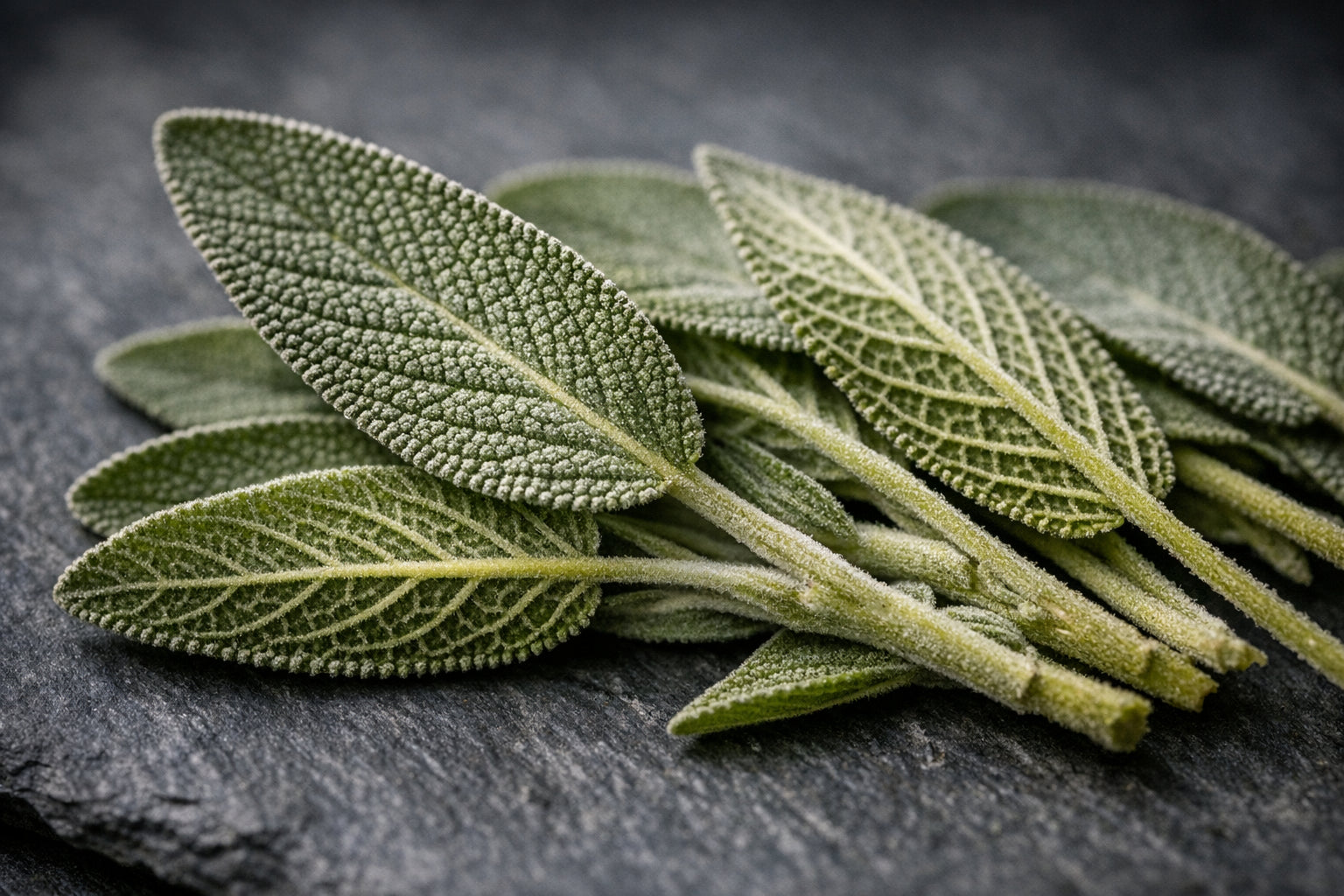
Sage
A dry, aromatic herb with a camphoraceous warmth. Sage brings a clean, purifying quality to compositions, suggesting Mediterranean hillsides and dried herb bundles.
Fragrance Pyramid
Olfactive Character
Dry, camphoraceous, and cleanly herbaceous. Sage is assertive and slightly medicinal. It has a purifying quality that suggests dried herbs and sun-warmed hillsides.
Origin & Harvest
Steam-distilled from the leaves of Salvia officinalis (common sage) or Salvia sclarea (clary sage). Common sage produces a sharper, more camphoraceous oil. Clary sage is softer and more musky. Cultivated across the Mediterranean and central Europe.
Key Molecules
Thujone provides the characteristic camphoraceous sharpness in common sage. Sclareol in clary sage offers a musky, amber-like warmth. Cineole adds a clean, eucalyptus-like freshness.
Safety & Regulation
Common sage oil contains thujone, which is neurotoxic at high doses. Fine fragrance use levels are well within safe limits. Clary sage is generally considered safer. Both are IFRA compliant at standard concentrations.
In Perfumery
Clary sage is more common in fine fragrance for its softer profile. Found in Eau Sauvage Parfum by Dior. Common sage appears in aromatic fougere compositions. In KIDA KYO, sage adds dry, herbal clarity.
History
Sage has been used medicinally and ceremonially since ancient Rome. The name comes from the Latin 'salvare' (to save). White sage smudging is a Native American tradition. In perfumery, both common and clary sage have distinct roles.

