
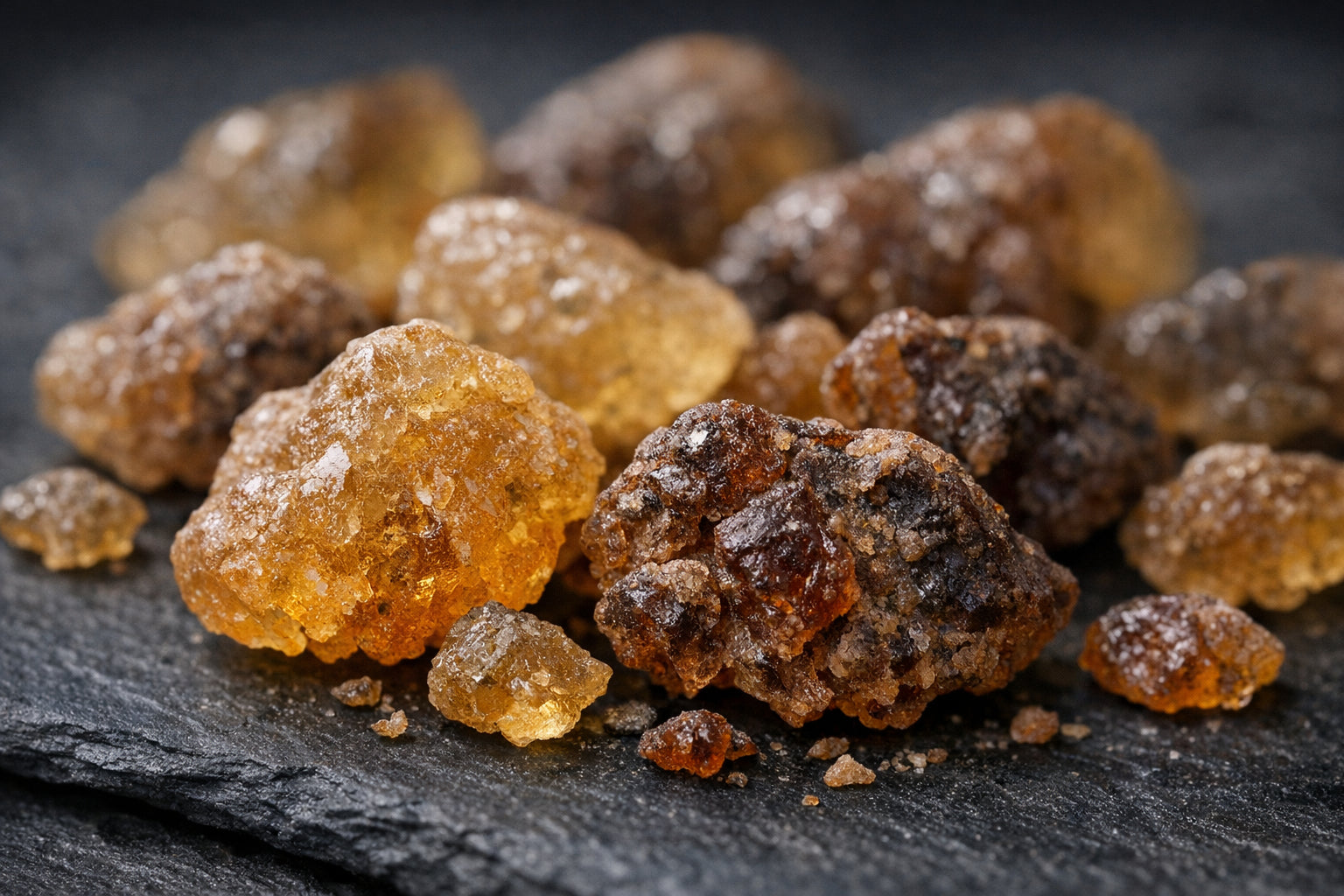
Myrrh
A dark, bittersweet resin with a medicinal, slightly smoky quality. Myrrh is ancient and complex, carrying the weight of thousands of years of ceremonial use.
Fragrance Pyramid
Olfactive Character
Bitter, smoky, and darkly resinous. Myrrh has a medicinal quality that distinguishes it from sweeter resins. It is dry and austere, with a mineral-like finish that feels ancient.
Origin & Harvest
Harvested from Commiphora myrrha trees in East Africa and the Arabian Peninsula. The resin exudes naturally from the bark and is collected as hardened tears. Steam distillation or solvent extraction produces the oil or absolute used in perfumery.
Key Molecules
Furanoeudesma-1,3-diene provides the bitter, smoky character. Curzerene adds warmth. Lindestrene contributes a faintly green, balsamic quality. The composition is complex, with over 200 identified compounds.
Safety & Regulation
May cause sensitisation in individuals allergic to balsams. IFRA compliant at standard use levels. Used safely in fine fragrance for centuries. Cross-reactivity with other resins is possible.
In Perfumery
Found in incense-inspired compositions such as CdG Avignon and Serge Lutens Myrrhe Ardente. Pairs with frankincense, labdanum, and oud. In KIDA KYO, myrrh adds ceremonial weight to our smoky compositions.
History
One of the three gifts of the Magi. Used in ancient Egyptian embalming, Greek medicine, and religious ceremonies across the ancient world. Myrrh was more valuable than gold in many historical periods.

