
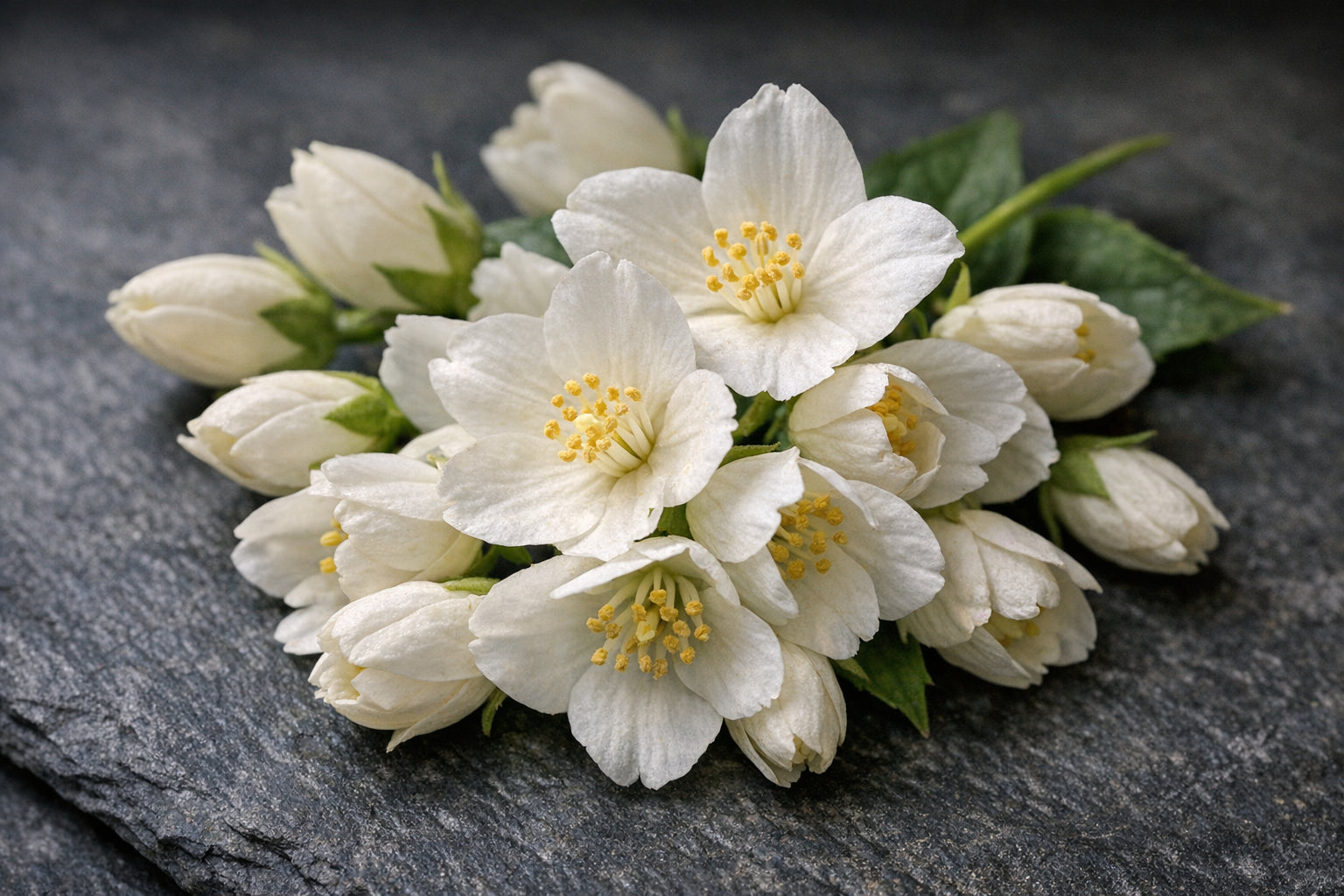
Jasmine
The queen of flowers in perfumery. Jasmine is rich, sensual, and complex, with an indolic depth that gives it an almost narcotic quality at higher concentrations.
Fragrance Pyramid
Olfactive Character
Rich, complex, and deeply sensual. Jasmine has a narcotic, almost intoxicating quality driven by its indole content. At lower doses it is elegantly floral. It is simultaneously fresh and heavy.
Origin & Harvest
Jasmine grandiflorum is grown primarily in Grasse, France, Egypt, and India. Jasmine sambac comes from India and Southeast Asia. The flowers must be picked at night when their scent is strongest. Absolute extraction requires approximately 8,000 flowers per gram.
Key Molecules
Indole gives jasmine its rich, narcotic depth. Benzyl acetate provides fruity freshness. Linalool adds a gentle, transparent lift. Methyl jasmonate contributes a green, slightly oily quality.
Safety & Regulation
Jasmine absolute contains known allergens including benzyl benzoate and farnesol. IFRA compliant at standard use levels. Jasmine is one of the 26 EU-listed fragrance allergens that must be declared.
In Perfumery
Present in the majority of fine fragrances. Essential to Joy by Jean Patou, No. 5 by Chanel, and Alien by Thierry Mugler. Pairs with rose, tuberose, sandalwood, and musk. In KIDA KYO, jasmine adds sensual depth.
History
Jasmine arrived in Europe from Persia in the 16th century. Grasse became the centre of jasmine cultivation in the 17th century. It remains one of the most expensive natural materials in perfumery.


