
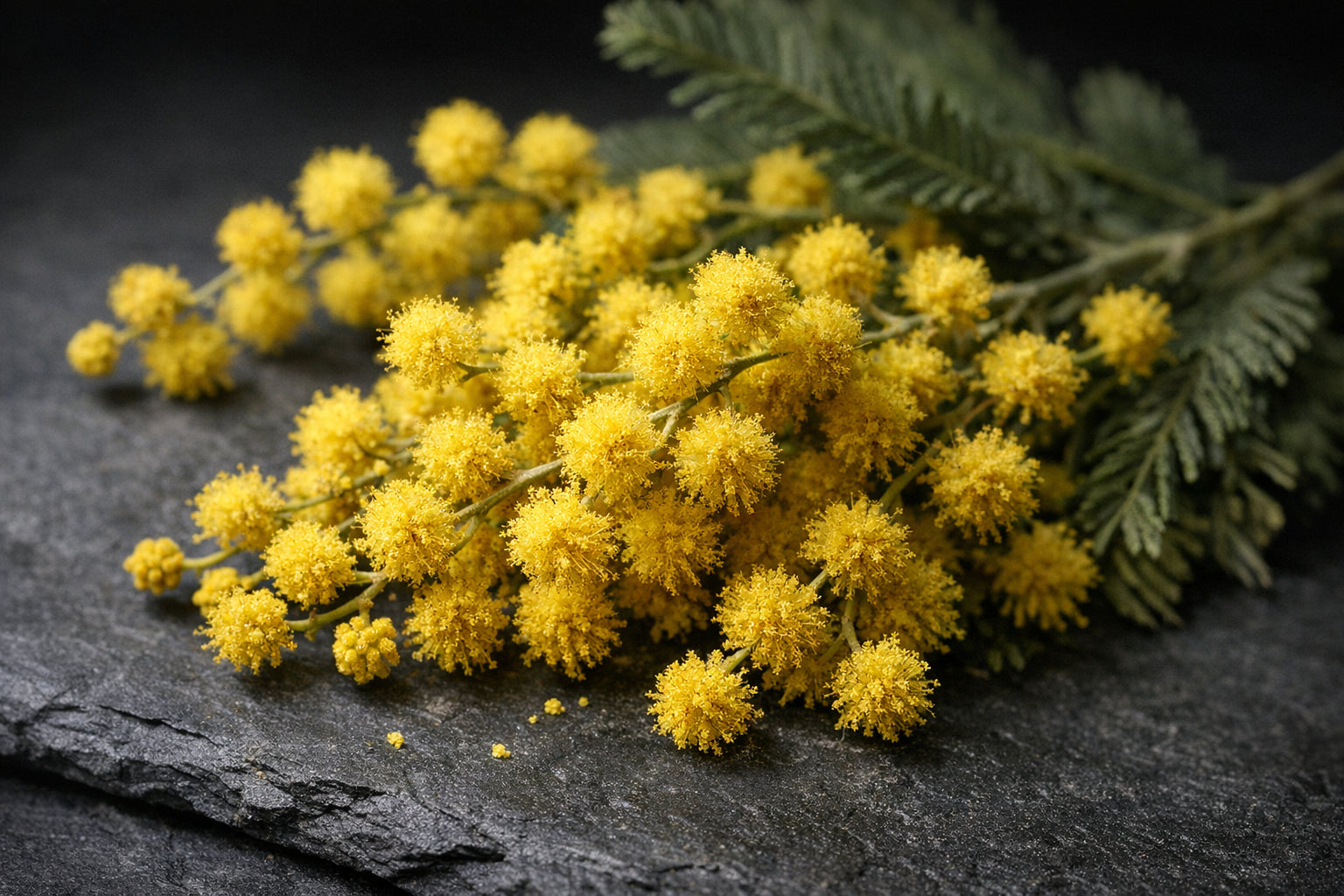
Mimosa
A soft, powdery floral with an almond-like sweetness. Mimosa brings a gentle, sun-drenched warmth that suggests the Mediterranean coast in early spring.
Fragrance Pyramid
Olfactive Character
Powdery, sweet, and gently green. Mimosa has an almond-marzipan quality unique among florals. It is soft and diffusive, with a hay-like drydown that recalls warm afternoons on the Cote d'Azur.
Origin & Harvest
Mimosa absolute is extracted from the flowers of Acacia dealbata, primarily grown in southern France and Australia. The yellow, fluffy flowers bloom in January and February. Extraction is by solvent to capture the delicate powdery notes.
Key Molecules
Anisaldehyde provides the almond-marzipan quality. Nonanal adds a waxy, slightly green facet. Methyl salicylate contributes a wintergreen-like freshness. The absolute is complex, with over 100 identified components.
Safety & Regulation
Mimosa absolute may contain allergens including farnesol and benzyl benzoate. IFRA compliant at standard use levels. Used safely in fine fragrance for decades.
In Perfumery
A beloved Grasse material. Found in L'Heure Bleue by Guerlain and Mimosa Pour Moi by L'Artisan Parfumeur. Pairs with heliotrope, iris, and sandalwood. In KIDA KYO, mimosa adds powdery softness.
History
Native to Australia, mimosa was introduced to the Cote d'Azur in the 19th century. It became a symbol of the Grasse perfume industry and the annual Mimosa Festival in the town of Mandelieu-la-Napoule.

